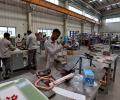
India's manufacturing sector growth fell to a joint 11-month low of 56.5 in November, restricted by competitive conditions and inflationary pressures amid a softer increase in factory orders, a monthly survey said on Monday. The seasonally adjusted HSBC India Manufacturing Purchasing Managers' Index (PMI) fell from 57.5 in October to 56.5 in November, signalling a softer improvement in the health of the sector. However, the pace of growth remained above its long-run average.

India's services sector growth recorded another month of robust expansion in July, albeit at a slightly slower pace than in June, largely supported by robust demand conditions and investment in technology, a monthly survey said on Monday. The seasonally adjusted HSBC India Services Business Activity Index was at 60.3 in July, down only fractionally from 60.5 in June. In the Purchasing Managers' Index (PMI) parlance, a print above 50 means expansion, while a score below 50 denotes contraction.

India's manufacturing sector growth eased slightly in July, on softer increases in new orders and output, while cost pressures and demand strength led to the steepest increase in selling prices since October 2013, a monthly survey said on Thursday. The seasonally adjusted HSBC India Manufacturing Purchasing Managers' Index (PMI) moderated slightly from 58.3 in June to 58.1 in July.

India's services sector activity growth touched a five-month high in August on stronger rise in new work orders, while payroll numbers rose solidly as companies remained upbeat regarding the economic outlook, a monthly survey said on Wednesday. The seasonally adjusted HSBC India Services Business Activity Index rose from 60.3 in July to 60.9 in August, registering the fastest expansion since March and was largely supported by productivity gains and positive demand trends.

India's services sector growth quickened in June from May's five-month low, amid a stronger rise in new orders and an unprecedented expansion in international sales, a monthly survey said on Wednesday. The seasonally adjusted HSBC India Services Business Activity Index rose from 60.2 in May to 60.5 in June, pointing to a sharp expansion in output. In the Purchasing Managers' Index (PMI) parlance, a print above 50 means expansion, while a score below 50 denotes contraction.

Stock markets are in for an event-heavy week ahead with a raft of Q1 earnings from blue-chips, the US Fed interest rate decision and foreign investors trading activity driving investors' sentiment, analysts said. Macroeconomic data announcements, monthly auto sales numbers and global market trends would also guide movement in the domestic equities, they said.

India's manufacturing sector growth moderated in August as output and sales rose at slowest rates since January, while competitive pressures and inflation concerns hampered business confidence, a monthly survey said on Monday. The seasonally adjusted HSBC India Manufacturing Purchasing Managers' Index (PMI) stood at 57.5 in August, below July's reading of 58.1 but above its long-run average of 54.0, signalling a substantial improvement in operating conditions.

From the Sensex pack, Zomato jumped nearly 5 per cent, followed by Titan which climbed almost 4 per cent. IndusInd Bank, Maruti, Tech Mahindra, Adani Ports, Bharti Airtel and HDFC Bank were also among the gainers.

India's services sector witnessed one of the strongest growth rates in over 13-and-a-half years in March on the back of strong demand that spurred sales and business activity, a monthly survey said on Thursday. The seasonally adjusted HSBC India Services Business Activity Index rose from 60.6 in February to 61.2 in March, one of the strongest expansions in total sales and business activity in close to 14 years. In the Purchasing Managers' Index (PMI) parlance, a print above 50 means expansion, while a score below 50 denotes contraction.

India's manufacturing sector output increased at a sharp pace in June as new business continued to flow in amid favourable demand conditions and resulted in record upturn in employment, a monthly survey said on Monday. The seasonally adjusted HSBC India Manufacturing Purchasing Managers' Index (PMI) increased from 57.5 in May to 58.3 in June, indicating a sharper improvement in business conditions. In PMI parlance, a print above 50 means expansion, while a score below 50 denotes contraction.

The services sector growth in India moderated in February amid softer expansions in business activity, sales and jobs, a monthly survey said on Tuesday. The seasonally adjusted HSBC India Services Business Activity Index registered 60.6 in February, down from 61.8 in January. In Purchasing Managers' Index (PMI) parlance, a print above 50 means expansion, while a score below 50 denotes contraction.

Global trends, trading activity of foreign investors and domestic macroeconomic data announcements would dictate terms in the equity market in a holiday-shortened week ahead, analysts said. Equity markets would remain closed on Wednesday for Gandhi Jayanti. "Looking ahead, it will be interesting to monitor Foreign Institutional Investors (FIIs) and their flow into India.

The HSBC Emerging Markets Index, a monthly indicator derived from the PMI surveys, remained only just above the neutral threshold of 50.0 in September, signalling muted output growth in emerging markets.

Broader markets outperformed the benchmark indices marginally; BSE Small-cap ended 0.5% higher while mid-caps were up 0.2%.
A figure above 50 indicates that the sector is expanding, while a figure below that level means contraction.

The services sector growth in India rose to a six-month high in January as new business expanded at a faster pace amid buoyant demand from domestic and external clients, a monthly survey said on Monday. The seasonally adjusted HSBC India Services PMI Business Activity Index rose to 61.8 in January, up from 59 in December, pointing to the sharpest rate of expansion in six months.
India's manufacturing sector growth fell to 18-month low in December amid softer increase in factory orders and output, despite minimal inflation, a monthly survey said on Wednesday. The HSBC India Manufacturing PMI survey, conducted by S&P Global, showed that there were softer, albeit sharp, increase in factory orders and output, while business confidence towards the year-ahead outlook strengthened. The seasonally adjusted HSBC India Manufacturing Purchasing Managers' Index (PMI) fell from 56 in November to an 18-month low of 54.9 in December.
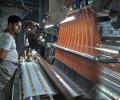
India's manufacturing sector growth climbed to a five-month high in February amid a sharper uptick in factory production and sales, supported by both domestic and external demand, a monthly survey said on Friday. The seasonally adjusted HSBC India Manufacturing Purchasing Managers' Index (PMI) rose from 56.5 in January to 56.9 in February, pointing to the strongest improvement in the health of the sector since September 2023. In Purchasing Managers' Index (PMI) parlance, a print above 50 means expansion while a score below 50 denotes contraction.
India's manufacturing sector activity moderated in April, but still recorded the second fastest improvement in operating conditions in three-and-a-half years supported by buoyant demand, a monthly survey said on Thursday.

The services sector growth in India rose to a three-month high in December supported by favourable economic conditions and positive demand trends, a monthly survey said on Friday. The seasonally adjusted HSBC India Services PMI Business Activity Index rose from 56.9 in November to 59 in December, highlighting a sharp increase in output that was the most pronounced since September. In Purchasing Managers' Index (PMI) parlance, a print above 50 means expansion while a score below 50 denotes contraction.

Among Sensex firms, Eternal, Tata Motors, State Bank of India, Adani Ports, NTPC, IndusInd Bank, Bajaj Finance, Asian Paints, Axis Bank and Sun Pharma were the major losers. Bharti Airtel, Tata Steel, Mahindra & Mahindra, Hindustan Unilever, Nestle and Maruti were among the gainers.

Titan, Nestle, Hindustan Unilever, State Bank of India, Larsen & Toubro, ITC, Zomato and Bajaj Finserv were also among the laggards. Adani Ports, IndusInd Bank, Tata Motors and HDFC Bank were among the major gainers.
India's manufacturing sector growth climbed to a 16-year high in March on the back of the strongest increase in output and new orders since October 2020, amid reports of buoyant demand conditions, a monthly survey said on Tuesday. The seasonally adjusted HSBC India Manufacturing Purchasing Managers' Index (PMI) surged to a 16-year high of 59.1 in March, from 56.9 in February, reflecting stronger growth of new orders, output and input stocks as well as renewed job creation. In Purchasing Managers' Index (PMI) parlance, a print above 50 means expansion while a score below 50 denotes contraction.
India's manufacturing sector growth climbed to a four-month high in January as a sharper upturn in new orders boosted output growth amid mild cost inflation, a monthly survey said on Thursday. The seasonally adjusted HSBC India Manufacturing Purchasing Managers' Index (PMI) recovered from an 18-month low of 54.9 in December to 56.5 in January. The latest reading highlighted the strongest improvement in the health of the sector since last September.

From the Sensex firms, Tech Mahindra, Tata Steel, Tata Motors, Titan, HDFC Bank, IndusInd Bank, Infosys and Kotak Mahindra Bank were among the biggest laggards. On the other hand, Adani Ports, Mahindra & Mahindra, Power Grid, Eternal and Hindustan Unilever were among the gainers.
India's services sector growth eased slightly in April but growth of new business and output remained sharp and among the fastest in 14 years amid favourable economic conditions and strong demand, a monthly survey said on Monday. The seasonally adjusted HSBC India Services Business Activity Index fell from 61.2 in March to 60.8 in April, highlighting one of the strongest growth rates seen in just under 14 years. Survey members attributed the latest upturn in output to favourable economic conditions, demand strength and rising intakes of new work.
India's manufacturing sector saw a slower growth rate for the second straight month in May but stayed firmly in expansion mode with global sales increasing to the greatest extent in over 13 years, a monthly survey said on Monday. The seasonally adjusted HSBC India Manufacturing Purchasing Managers' Index (PMI) fell from 58.8 in April to 57.5 in May, signalling a slower but substantial improvement in the health of the sector. The index had climbed to a 16-year high of 59.1 in March.

Bajaj Finance, IndusInd Bank, State Bank of India, Maruti, Tata Motors, ITC, Tata Steel and Reliance Industries were also among the gainers. Nestle, NTPC, Kotak Mahindra Bank, Power Grid and Titan were among the laggards.

From the 30 Sensex firms, IndusInd Bank, Asian Paints, Hindustan Unilever, Tata Motors, Tata Steel, Titan, Reliance Industries and NTPC were among the major laggards. Tech Mahindra, Mahindra & Mahindra, Kotak Mahindra Bank, Infosys, HCL Technologies and State Bank of India were among the major gainers.

India's services sector growth rate saw a slight fall in July but remained in the positive terrain for the ninth month in a row, amid rise in new orders and employment levels holding up, an HSBC survey says.
India's manufacturing sector growth improved in November, registering the fastest pace in five months, driven by a strong pick up in new orders and improved purchasing activity, an HSBC survey said on Monday.

Domestic macroeconomic data announcements, global trends and trading activity of foreign investors would guide market sentiments this week, analysts said. After a record rally, markets may face volatile trends this week amid elevated valuations and investors would also keep a track of global oil benchmark Brent crude and rupee-dollar movement for further cues. "Potential volatility in the stock market is anticipated this week. Elevated valuations remain a concern, with investors now focusing on monsoon progress and its impact on the rural economy.

The HSBC India Manufacturing Purchasing Managers' Index (PMI) - a measure of factory production - improved slightly to 55 in June, from 54.8 in May.

India's manufacturing sector growth slowed marginally in February, although strong domestic orders were likely to support output expansion in the coming months, an HSBC survey has said.
Geopolitical developments between India and Pakistan, quarterly earnings and macro data will be the key drivers of stock markets in the holiday-shortened week, say analysts.

The HSBC Emerging Markets Index, a monthly indicator derived from Purchasing Managers' Index surveys, inched up to 50.6 in May from 50.4 in April, indicating weak output growth across global emerging markets.

India's manufacturing sector activity contracted for the third straight month in October amid falling levels of production and new orders, as the business climate within the country remained tough, an HSBC survey said on Friday.

Meanwhile, outlook for global emerging markets remained relatively weak in September.

Equity markets will take cues from the US tariff related developments, global trends and trading activity of foreign investors this week, analysts said.

The index has posted below the 50 mark, which marks contraction, for the third consecutive month.
